
Most pool owners pay for weekly service without knowing what should happen on each visit. Some providers skim the surface, dump a puck in the skimmer, and leave. Others run a full checklist that keeps the pool swimmable and the equipment alive for years longer than it otherwise would. Here's the complete breakdown of what a real weekly pool service visit should include — and how to tell if yours is cutting corners.
The 8-point weekly service checklist
A thorough weekly visit covers eight tasks, every single week, in roughly the same order. If your provider is skipping any of these, the pool will eventually show it.
- Surface skimming — all floating debris off the water surface with a leaf net. In Florida, this includes pollen, oak leaves, love bugs, and the occasional frog.
- Floor vacuuming — settled debris off the pool floor and steps, either with a manual vacuum or by emptying and resetting the robotic cleaner if you have one.
- Wall and tile brushing — brush the waterline tile, walls, steps, and any ledges. This prevents biofilm from getting a foothold and keeps calcium scale from bonding permanently.
- Basket cleaning — empty the skimmer basket(s) and the pump strainer basket. Clogged baskets restrict flow, which starves the filter and shortens pump life.
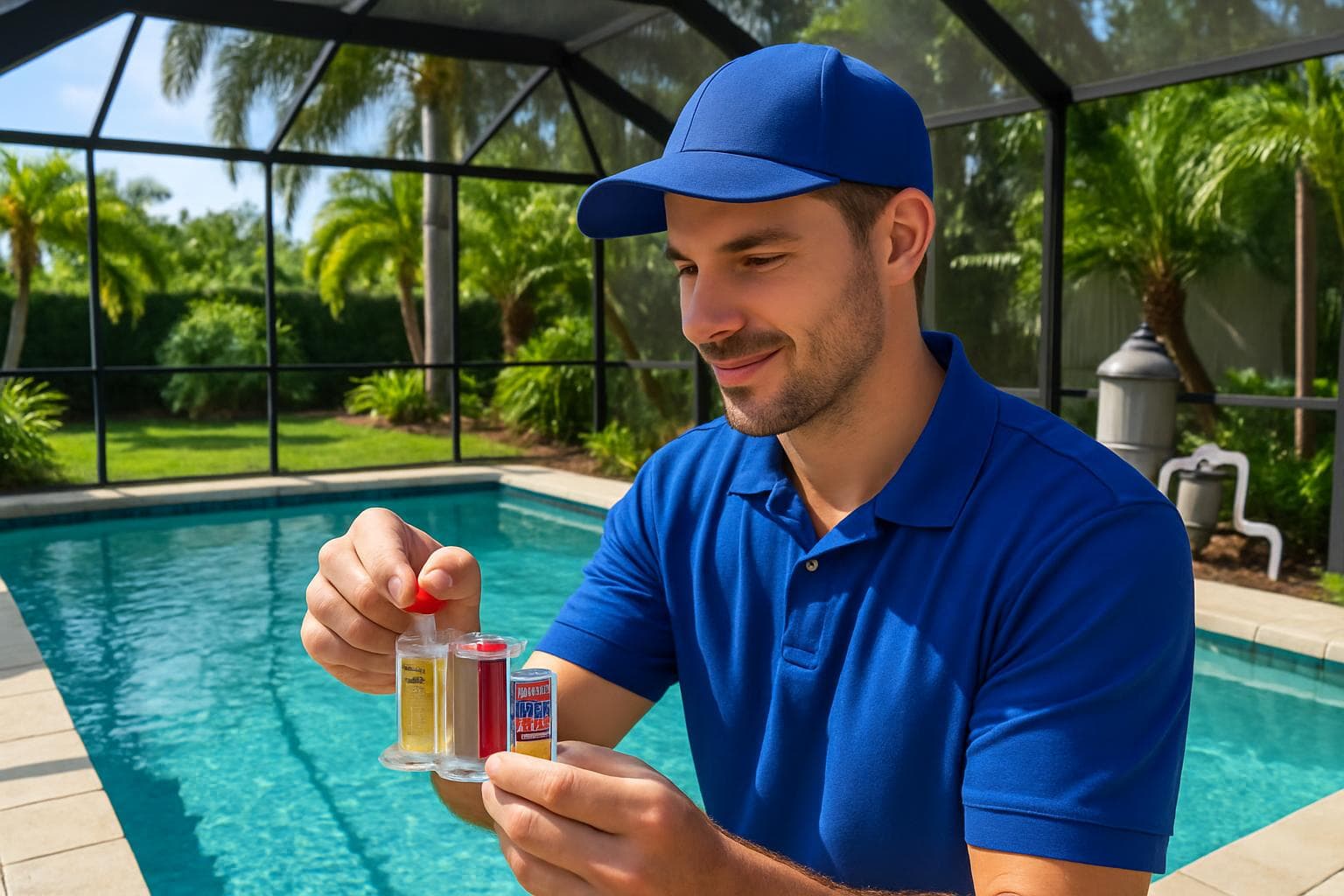
- Full chemistry testing— test free chlorine, total chlorine, pH, alkalinity, calcium hardness, and cyanuric acid. Not just "dip a strip and glance at it" — actual reagent-based or photometer readings with documented results.
- Chemical dosing — adjust chlorine, acid, and stabilizer based on the test results. The right dose depends on the readings, pool volume, and what the weather is doing this week.
- Equipment visual inspection — check the pump for leaks, note filter pressure, inspect the heater for error codes, examine the salt cell (if applicable), and verify the timer or automation schedule.
- Photo report — a same-day report with photos of the pool before and after, chemistry readings, and notes on anything flagged. This is the accountability layer.
At Pool Optics, every weekly cleaning visit follows this exact checklist. Same technician, same day, every week.
What the chemistry test actually measures
Chemistry testing is the part that separates professional service from expensive pool sitting. Here's what each reading tells your technician:
- Free chlorine (FC) — the active sanitizer killing bacteria and algae. Target: 2–4 ppm. Below 1 ppm and the pool has no protection.
- Total chlorine (TC) — free chlorine plus combined chlorine (chloramines). If TC is significantly higher than FC, chloramines have built up and the pool needs a shock.
- pH — acidity/alkalinity of the water. Target: 7.2–7.6. Above 7.8 and chlorine becomes only 20–30% effective. Below 7.0 and the water corrodes plaster and equipment.
- Total alkalinity (TA)— the water's buffering capacity against pH swings. Target: 80–120 ppm.
- Calcium hardness (CH) — dissolved calcium. Target: 200–400 ppm. Too low and the water dissolves calcium from the plaster. Too high and calcium deposits form everywhere.
- Cyanuric acid (CYA) — chlorine stabilizer that protects FC from UV degradation. Target: 30–50 ppm. Above 80 ppm, chlorine locks up and stops working effectively.
If your service provider can't tell you these numbers after each visit, they're not testing properly. Chemistry is the foundation — everything else is cosmetic without it.
The equipment check most services skip
This is where weekly service pays for itself financially. A pump seal that starts weeping costs $80 to replace early. That same seal, ignored for three months, burns out the motor — $600–$900 for a new variable-speed pump.
Every weekly visit should include a visual walk of the equipment pad:
- Pump — check for leaks at the lid, unions, and shaft seal. Listen for bearing noise. Verify priming.
- Filter pressure gauge — note the current reading and compare to the clean baseline. A 8–10 PSI rise means the filter needs cleaning.
- Heater— check for error codes on the display, verify ignition if it's in use, and inspect the exhaust for soot or corrosion.
- Salt cell (if applicable) — check the controller for error codes, inspect the cell plates for calcium buildup. When buildup gets heavy, we roll in our salt cell service for a full clean or replacement.
- Timer / automation — verify the pump schedule matches the season. Summer in Florida demands 8–12 hours of daily runtime; winter can drop to 6–8.
Equipment problems caught early cost $50–$100 to address. The same problems caught three months later cost $500–$2,000.
Photo reports: the accountability layer
A photo report is how you verify the work actually happened. After every visit, your technician should send a report that includes:
- Before and after photos of the pool surface and floor
- Chemistry test results (actual numbers, not just "looks good")
- Notes on any equipment concerns or upcoming maintenance
- Filter pressure reading
- What chemicals were added and in what amounts
If your current provider doesn't send photo reports, you have no way to know whether the visit happened at all — let alone whether it was thorough. This is the single clearest signal that separates accountable service from bare-minimum service.
What weekly service does NOT include
Weekly service covers the recurring maintenance that keeps water safe and equipment running. It does not typically include:
- Filter deep cleans — cartridge soaks, sand changes, or DE grid replacements. These happen quarterly or as needed, usually at an additional charge.
- Salt cell replacement — cells last 3–5 years. Cleaning is part of weekly service, but full replacement is a separate job. See our salt cell service page for what that involves.
- Green-to-clean recovery— if a pool turns green, that's a deep clean engagement, not a regular weekly visit.
- Resurfacing, tile replacement, or structural repairs — these are contractor-level projects.
Good weekly service prevents most of the above from being needed prematurely. That's the whole point.
Why weekly is the minimum in Florida
In northern states, biweekly pool service can work for part of the year. In Florida, it doesn't — and here's the biology behind it.
Algae doubles every 4–6 hours at zero chlorine in 85°F+ water. Florida pools hit 85°F by mid-April and stay there through October. A single skipped week in summer can drop chlorine residual to zero within 3–5 days, and once chlorine hits zero, a clear pool can turn visibly green within 48 hours.
UV intensity in Pinellas County degrades unprotected chlorine at roughly 75% per day. Even with proper CYA levels, free chlorine loss of 1–2 ppm per day is normal during peak sun season. Weekly dosing keeps pace with this loss. Biweekly cannot.
If you're curious what happens when chemistry slips, our cloudy pool guide covers the six most common consequences.
How to verify your service is doing the full job
You don't need to watch every visit. These four checks tell you whether your provider is thorough:
- Review the photo report — does it show chemistry numbers, before/after photos, and equipment notes? Or just a single photo of a blue pool?
- Track chemistry trends — log the FC, pH, and CYA numbers from each report. Stable, in-range readings week over week mean the dosing is precise. Wild swings mean something is off.
- Check the baskets — within a day of the visit, open the skimmer and pump basket. They should be empty or near-empty.
- Walk the equipment pad — look for new leaks, unusual sounds, or error codes. If your service flagged something in the report, see whether it matches what you observe.
If you're looking for a service that gets all eight items right every week, send a quote request or call (352) 586-0364. Jacob responds within a few hours during business days, and we can usually start within 2–4 days. Not sure whether to keep doing it yourself? Read our weekly service vs DIY cost comparison for the honest math.
Frequently asked questions
What does weekly pool service include?
A complete weekly pool service visit includes surface skimming, floor vacuuming, wall and tile brushing, skimmer and pump basket cleaning, full chemistry testing (free chlorine, pH, alkalinity, calcium hardness, cyanuric acid), chemical dosing, equipment visual inspection, and a same-day photo report. If any of these are missing, the service is incomplete.
How long should a weekly pool service visit take?
A thorough weekly visit on a standard residential pool takes 35–55 minutes on-site, plus drive time. Visits under 20 minutes almost always mean chemistry testing, brushing, or equipment checks are being skipped. The photo report should show enough detail to confirm the full checklist was completed.
Are chemicals included in weekly pool service?
With most reputable providers, yes. Standard chemicals — liquid chlorine, muriatic acid, cyanuric acid (stabilizer), and salt for salt-water systems — are included in the monthly rate. Specialty products like algaecides, phosphate removers, or clarifiers are occasionally needed and typically billed separately when they come up.
How do I know if my pool service is doing a good job?
The clearest indicator is a same-day photo report showing the pool before and after, chemical test readings, and any flagged equipment issues. Beyond that: consistent water clarity week to week, stable chemistry readings, no surprise algae blooms, and proactive communication when equipment shows wear.
What happens if my pool service skips a week?
In Florida, a single skipped week in summer can drop chlorine residual to zero and turn a clear pool green within 3–5 days. Algae doubles every 4–6 hours at zero chlorine in 85°F+ water. Reliable weekly service never skips — same technician, same day, every week, with a reschedule within 24 hours if weather forces a delay.
Should pool service include equipment inspection?
Yes. Every weekly visit should include a visual check of the pump, filter pressure gauge, heater, salt cell (if applicable), timer, and automation panel. Equipment problems caught early cost $50–$100 to address. The same problems caught three months later cost $500–$2,000. Equipment inspection is where good weekly service pays for itself.